Air Conditioning TM44 Inspections in the UK

If your building uses air-conditioning, you may be legally required to have a TM44 inspection. TM44 surveys ensure your systems are running efficiently, safely and in line with the UK’s Energy Performance of Buildings Regulations.

What Does TM44 Mean?

TM44 refers to the official CIBSE guidance used by accredited energy assessors to carry out air-conditioning inspections. The regulation applies to any commercial or domestic building with a combined cooling capacity of 12kW or more.

Is a TM44 Survey a Legal Requirement?

Yes. UK law requires qualifying systems to be inspected every five years. A valid inspection includes:

· A TM44 report

· An advisory report with energy-efficiency recommendations

· Details of system performance and maintenance issues

Who Enforces TM44 Regulations?

TM44 compliance is enforced by local Trading Standards departments. They can request your latest inspection certificate at any time and issue financial penalties if you fail to produce it.

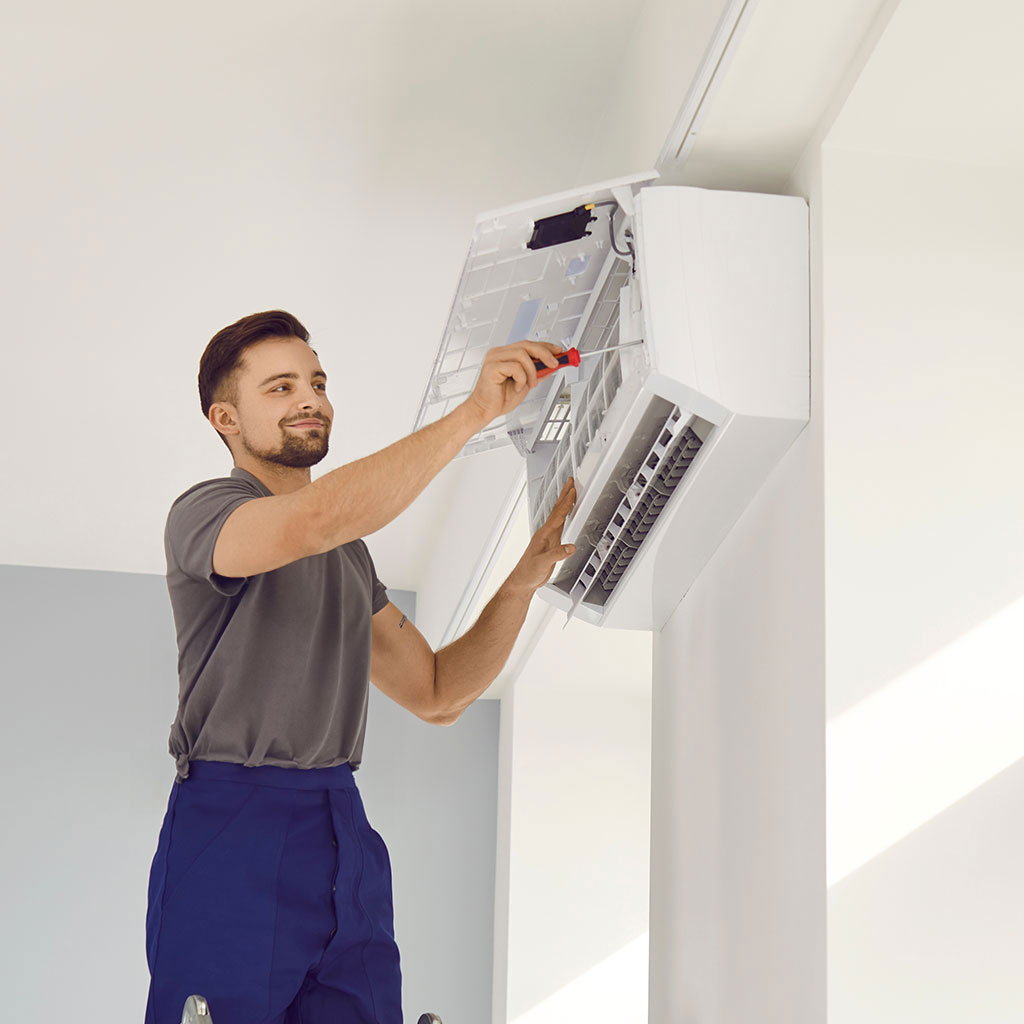
Man Fitting Air Con

Which Premises Need a TM44 Inspection?

TM44 applies to almost all non-domestic buildings, including:

· Offices and commercial premises

· Retail shops and shopping centres

· Restaurants, hotels and leisure facilities

· Warehouses and industrial units

· Healthcare and educational buildings

· Managed and multi-tenanted properties

If your property has several small split systems, their cooling capacities are added together – meaning many sites exceed the 12kW threshold.

Benefits of a TM44 Survey

A professional TM44 inspection helps your business:

· Reduce energy costs by identifying inefficient operation

· Improve system reliability and reduce downtime

· Extend equipment life through better maintenance strategies

· Enhance comfort for staff, customers and tenants

· Demonstrate legal compliance and reduce audit risk

· Support ESG, sustainability and carbon-reduction goals

Man working on TM44 Inspection

What Happens If You Don’t Have a TM44?

Non-compliance can lead to:

· Fixed penalties of £300 per system, repeatable

· Requests for evidence from Trading Standards

· Increased running costs due to energy waste

· Decreased confidence from tenants or stakeholders

Book Your TM44 Inspection

Ensuring your TM44 is up to date is one of the simplest ways to stay compliant while improving energy performance and reducing operating costs. A certified assessor can provide clear, actionable recommendations that benefit both your business and the environment.

· A TM44 report

· An advisory report with energy-efficiency recommendations

· Details of system performance and maintenance issues
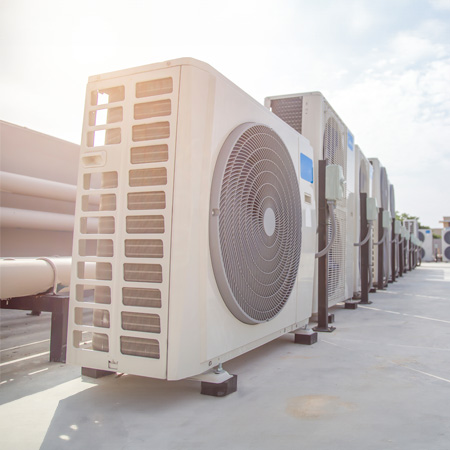
Air Conditioning Units

Accredited TM44 Inspectors for:

Mitsubishi Air Conditioning Installation Fujitsu Air Conditioning Installation Toshiba Air Conditioning Installation Panasonic Air Conditioning Installation Daikin Air Conditioning Installation Mitsubishi Heavy Industries Air Conditioning Installation

How It Works

Woman on phone booking a free survey for client

Book Your TM44 Inspection

Get in contact with us and we’ll visit the site to give you an accurate quote.

A member of the Quantech team performing an Air Conditioning Installation

We Conduct Your TM44 Assessment

A certified TM44 inspector will visit your premises to carry out a thorough evaluation of your air conditioning units, ensuring they meet regulatory standards.

A happy work team with a cool working environment provided by Quantech's air conditioning

Receive Your Compliance Report

You’ll receive a detailed TM44 inspection report outlining system performance, energy efficiency improvements, and any actions required to stay fully compliant.
Hear From Our Clients

Why Choose Quantech Environmental Limited
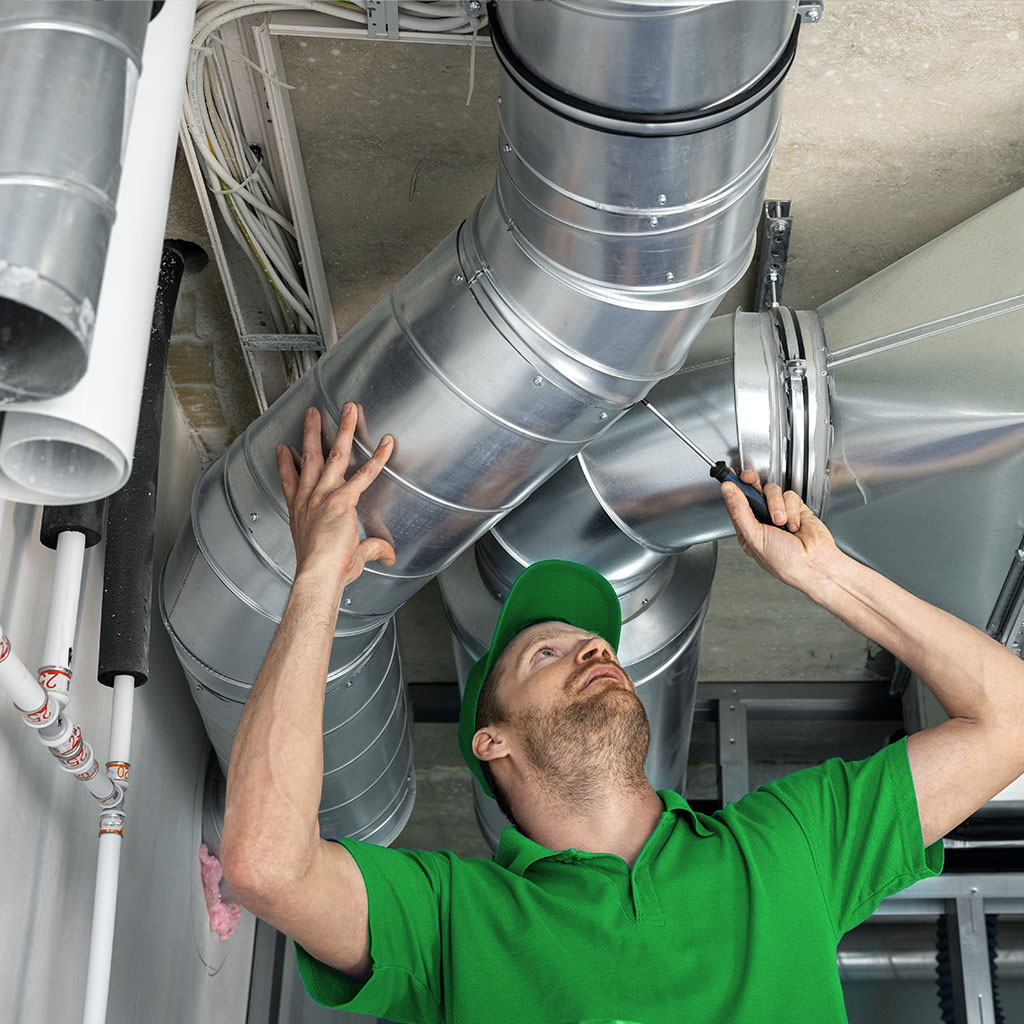
A Quantech technician installing an air conditioning unit

Experience

EstablishedSince 1989

With over 35 years of dedicated industry experience, Quantech Environmental Limited is your trusted partner for all air conditioning and HVAC needs. Our extensive expertise spans across commercial and domestic sectors, ensuring that we deliver efficient and effective solutions tailored to your specific requirements.

Trust

5

Based on 12 reviews

As well as being fully DBS checked, our Gas Safe, SMAS and REFCOM registered technicians always prioritise your safety. Complimentary maintenance check-ups ensure peak performance, reaffirming our commitment to reliability and excellence.

Our Promise

We promise to uphold the highest standards of quality, providing transparent communication, strict guarantees and robust warranties on all our air conditioning & HVAC units. Your satisfaction and comfort are our utmost priority and we stand firmly behind our work.

Accreditations
Refcom Accreditation Gas Safe Accreditation Safety Schemes in Procurement Accreditation Institute Of Refidgerators Accreditation Federation of Small Businesses Accreditation Construction Skills Certification Scheme Accreditation Air Conditioning and Heat Pump Institute Accreditation F Gas Regulations DBS Checked

FAQs

What is Air Conditioning?

Air Conditioning is becoming quite a popular feature in homes and businesses in the UK, particularly in the warmer months of the year. It provides a comfortable and controlled environment by regulating the temperature and humidity of a space. The main type of air conditioning systems in the UK are 'split systems'. Split systems consist of an indoor unit that is installed inside the building, and an outdoor unit - the correct name being a Condensing Unit - that is installed outside. These systems can be expensive to install, but they offer efficient cooling, and heating, and are quite unobtrusive. Air conditioning systems work by drawing in hot air from the room and passing it over a refrigerant, which circulates throughout copper pipes called an evaporator coil, and which absorbs the heat and cools the air. The cooled air is then blown back into the room, while the heat is released outside through the condensing unit. In the UK, air conditioning units are rated using the Seasonal Energy Efficiency Ratio (SEER). The higher the SEER rating, the more energy efficient the unit is. It's important to choose an air conditioning system with a high SEER rating, as it can save money on energy bills in the long run. Units may also have a COP (Coefficient Performance) rating and this can also be used to decide energy efficiency. Air conditioning systems can be used to cool and dehumidify a space, as well as to heat it. In the UK, air conditioning systems that can heat a space are known as "reverse cycle" or "heat pump" systems. These systems work by reversing the flow of the refrigerant, allowing them to extract heat from the outside air and bring it into the building via the indoor unit. It's important to properly maintain an air conditioning system to ensure it runs efficiently and effectively. This includes cleaning or replacing the filters regularly, checking for and sealing any refrigerant leaks, and having the system serviced by a professional on a regular basis. Overall, air conditioning is a convenient and effective way to regulate the temperature and humidity in a space in the UK. By choosing an energy efficient system and properly maintaining it, it can provide comfortable and controlled indoor environments all year round.

How Noisy are Air Conditioning Units?

The noise level of modern air conditioning units in the UK can vary depending on a number of factors, such as the type of unit concerned, its size and the location where it is installed. Some modern indoor air conditioning units are designed to operate quietly, with noise levels typically around 19-20 decibels (dB) at low speed. This is about the same level of noise as a whisper or a quiet library. Modern outdoor units are, depending on the size and the manufacturer, typically around the 50dba mark, though its important to remember that rating is when the unit is running at maximum capacity and is measured one metre in front of the unit; the reality is the unit will hardly ever run at maximum capacity and nor will any person be standing in one metre in front of said unit. However, if the air conditioning unit is not installed properly or is too small for the space it is intended to cool, it may have to work harder to achieve the desired temperature, resulting in increased noise levels. Additionally, older or poorly maintained air conditioning units may also be noisier than newer models. New models have compressors which use inverter technology and these are really very quiet; if your unit doesn't have inverter technology then you should consider replacing it, if not for the energy efficiency savings then for the lower noise levels! It's also worth noting that noise tolerance can vary greatly among individuals, so what one person finds noisy may not be a problem for another. If you're concerned about noise levels, it's always a good idea to ask your air conditioning installer or supplier for information on the noise level of the specific unit you're considering, and to seek professional advice on the best installation and maintenance practices to minimise noise.